
In a 2025 meta-analysis, day 5 blastocysts were linked to higher pregnancy and live birth rates than day 6 blastocysts, while newborn outcomes were similar and poor quality day 5 embryos showed comparable potential to good quality day 6 embryos.

In a 2025 meta-analysis, day 5 blastocysts were linked to higher pregnancy and live birth rates than day 6 blastocysts, while newborn outcomes were similar and poor quality day 5 embryos showed comparable potential to good quality day 6 embryos.
A 2025 study found that aging eggs and their support cells may have increased ribosome activity that contributes to reduced egg quality, and early clinical results suggest that rapamycin may help improve embryo quality and pregnancy rates.
A 2025 study of single-blastocyst transfers found no increase in birth defects or adverse pregnancy outcomes when transferring poor quality embryos compared to good quality ones.
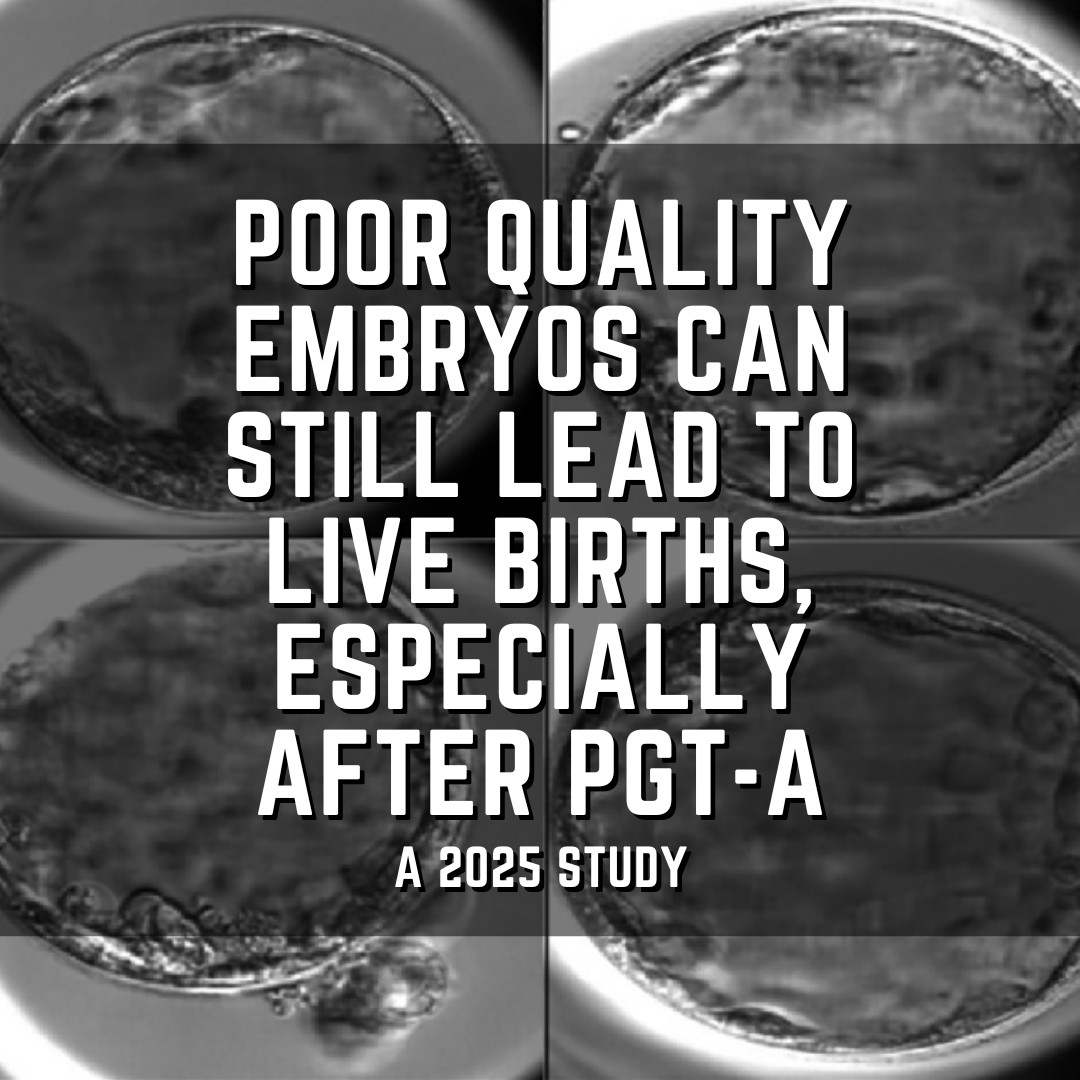
A 2025 study found that while poor quality blastocysts are less likely to be euploid, some can still lead to healthy live births. Tested poor quality embryos had higher live birth rates and lower miscarriage rates than untested ones, especially when they developed by day 5 instead of day 6.
In a 2025 study, researchers tested a noninvasive MRI-like tool that reads an embryo’s metabolic health, accurately predicting which would stop developing and potentially helping select the healthiest for transfer.


A 2024 study compared successful and unsuccessful euploid transfers, finding that female age had no impact, while BMI, embryo quality and the type of FET used did.



Researchers in a 2023 study found that day 7 euploids have the lowest ongoing pregnancy rate, when compared to day 5 and 6 euploids. These embryos were mostly poor quality.
Researchers in a 2023 study show that poor quality embryos have acceptable live birth rates compared to good and fair quality embryos, with only a slight increase in pregnancy loss and no differences in perinatal outcomes.

Researchers in a 2023 study found that arrested embryos have a high degree of aneuploidy, which is mainly due to mitotic errors that occur after fertilization. In a separate analysis of non-arrested embryos, they found that good quality/day 5 embryos have less aneuploidies compared to poor quality/day 6 and 7 embryos.

Researchers in a 2023 study found that embryos that take longer to develop had lower quality scores for both the ICM and trophectoderm, and had reduced clinical pregnancy and live birth rates.

Researchers in a 2023 study found that good quality embryos were more likely to give rise to male births, particularly those with higher quality trophectoderm scores.

Researchers in a 2023 study combined the results of 74 studies to investigate what factors contribute to euploid live birth and miscarriage rates, identifying embryo quality, maternal age, specific diagnoses, repeat freeze/thaw, and other factors.


Researchers in a 2023 study found comparable pregnancy and neonatal outcomes when transferring a day 5 poor quality or a day 6 good quality embryo.

Researchers in a 2022 study performed a meta-analysis to combine the results of studies examining the transfer of a good and poor quality embryo together (vs one good quality embryo alone), and found no differences in pregnancy or live birth rates, but increases in the rate of multiples.


What’s the ideal follicle size for IVF? Researchers in a 2022 study compared follicle size at the time of trigger and related it to rates for egg maturity, fertilization, good quality embryos and euploidy. They also examined the association between follicle size and age and BMI.


Researchers in a 2022 study showed that extending embryo culture to day 7 increases the number of useable blastocysts, particularly for older women.




This post takes a closer look at what “poor-quality” embryos really mean in IVF. At the cleavage stage, they often have fewer cells or high fragmentation, while at the blastocyst stage, a grade C means the inner cell mass and trophectoderm contain fewer, loosely packed cells. These embryos tend to have lower success rates than good-quality ones, but studies show they can have similar perinatal outcomes.
Researchers in a 2019 study compared IVF outcomes from men with low or high sperm DNA fragmentation, finding that high SDF patients had poorer quality blastocysts and a higher chance of miscarriage.