
Researchers in a 2026 meta-analysis combined the results of 9 studies and found that embryos from 0PN zygotes had similar pregnancy outcomes to embryos from normally fertilized (2PN) zygotes, despite being less likely to develop into blastocysts.
In IVF, fertilization is checked the day after insemination when two pronuclei (2PN) are visible in the fertilized egg (zygote). These pronuclei contain the DNA from the egg and sperm before they merge to form the embryo’s nucleus.
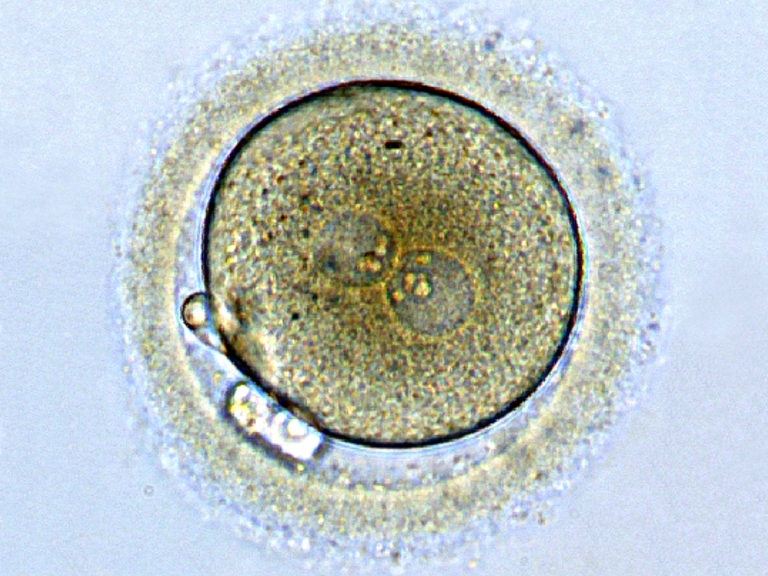

Because pronuclei are only visible briefly, some normally fertilized zygotes may be mistakenly classified as 0PN (no visible pronuclei) during the fertilization check.
Embryologists are cautious with these zygotes because they may have abnormal chromosome numbers, leading some clinics to discard the embryos that develop from them. However, studies have shown that some can develop into blastocysts and even lead to healthy live births.
Chan et al. (2026) combined the results of 9 studies to see how embryos from 0PN zygotes compare to normally fertilized 2PN zygotes. Although the review also examined 1PN zygotes, this post focuses on the results for 0PN zygotes.
For more background, check out my post on Abnormal fertilization and the potential of 0PN, 1PN and 3PN zygotes.
🔗 Original studies are referenced in this post or within the linked Remembryo posts.
💡 Reminder: Terms underlined with a dotted black line have glossary definitions. Hover or tap to see a short definition, or select “Read full definition” in the pop-up to view the complete glossary entry. Viewing glossary entries does not count toward your paywall limit.
Study details
- Study type: Systematic review and meta-analysis of 11 observational studies (no randomized trials), with 9 reporting on 0PN outcomes. Included studies had a 16–18 h post-insemination fertilization check window.
- Risk of bias: Of the 9 studies evaluating 0PN zygotes, the authors judged three as having some concerns and six as having a high risk of bias.
- Participants: 33,559 single embryo transfer cycles for pregnancy outcomes.
Embryos from 0PN zygotes had similar pregnancy outcomes
-
Live birth: 35.0% vs 34.4%
- There was no statistically significant difference between embryos from 0PN and 2PN zygotes (odds ratio [95% CI]: 0.94 [0.83–1.06], p= 0.33, 7 studies, 34,848 participants, I2= 2%).
-
Clinical pregnancy: 45.2% vs 44.9%
- No difference (OR [95% CI]: 0.96 [0.85–1.08], 6 studies, 34,548 participants, I2= 0%).
-
Miscarriage: 20.2% vs 22.3%
- No difference (odds ratio [95% CI]: 1.04 [0.84–1.29], 6 studies, 15,528 participants, I2= 0%).
-
Birth defects: 1.35% vs 1.30%
- No difference (OR [95% CI]: 1.05 [0.45–2.45] (p= 0.91, 6 studies, 11,840 participants, I2= 0%). There was no statistically significant difference in birth defect rates.
Embryos from 0PN zygotes were less likely to develop into blastocysts but had similar euploid rates
-
Blastocyst formation: 42.5% vs 51.1%
- There was a 66% lower odds of developing into a blastocyst with 0PN vs 2PN zygotes (OR [95% CI]: 0.34 [0.17–0.68], 4 studies, 99,425 embryos, I2= 99%). Because there was substantial variability between studies, this finding should be interpreted with caution.
-
Euploids: 35.7% vs 37.2%
- No difference (OR [95% CI]: 0.86 [0.50–1.48], 3 studies, 21,709 embryos, I2= 63%).
Outcomes differed between IVF and ICSI
When the researchers analyzed IVF and ICSI separately, they found that the results were different.
- In IVF, embryos from 0PN zygotes had lower live birth rates, lower clinical pregnancy rates, and lower blastocyst formation rates than embryos from 2PN zygotes.
- In ICSI, there were no statistically significant differences between embryos from 0PN or 2PN zygotes for these outcomes.
Conclusions
This study suggests that embryos from 0PN zygotes that reach the blastocyst stage have comparable live birth, clinical pregnancy, miscarriage, birth defect, and euploidy rates. However, they’re less likely to develop into blastocysts in the first place.
One possible explanation is that not all 0PN zygotes are actually abnormal. As I covered in a previous post, time-lapse imaging has shown that some zygotes labelled as 0PN are actually “false” 0PNs, which are really normally fertilized 2PNs but their two pronuclei form or disappear outside the standard 16–18 hour fertilization check. In contrast, “true” 0PNs never form pronuclei and are much less likely to continue developing. This helps explain why some zygotes classified as 0PN can still lead to healthy pregnancies.
The subgroup analyses also suggest that whether the 0PN zygote came from IVF or ICSI may matter. Pregnancy outcomes were lower for embryos from IVF-derived 0PN zygotes, but not for embryos from ICSI-derived 0PN zygotes. One possible explanation is that with ICSI, the sperm is injected directly into the egg, making it easier to confirm that fertilization involved only a single sperm. With IVF-derived 0PN zygotes, however, it’s more difficult to know if normal fertilization occurred or polyspermy (fertilization by more than one sperm). As a result, the IVF group may include more embryos that were truly abnormally fertilized. However, the authors note that these subgroup analyses included fewer studies and should be interpreted with caution.
Although this review also examined embryos from 1PN zygotes, the findings were largely consistent with a previous 2025 meta-analysis I covered: embryos from 1PN zygotes had lower live birth and clinical pregnancy rates overall, but similar miscarriage rates, birth defect rates, and euploid rates compared with embryos from 2PN zygotes.
Limitations: All included studies were observational, and six of the nine studies evaluating 0PNs had a high risk of bias, with the certainty of evidence ranging from moderate to very low. In addition, many clinics preferentially transferred 2PNs, making it difficult to know whether differences in outcomes were due to the embryos themselves or how they were selected for transfer.
Want to read more about 0PNs or abnormally fertilized zygotes?
This post covers what occurs during normal fertilization and what it means to have an abnormally fertilized zygote (0PN, 1PN, 3PN, 4PN). Using PGT to test these embryos reveals that many have the correct number of chromosome sets and can lead to successful live births. Read more.
A 2025 study found that 0PN zygotes can actually be normally fertilized but missed during the standard 16–18 hour fertilization check, while those that never form pronuclei are likely unfertilized eggs, supporting a slightly earlier check around 16–17 hours and continued culture of 0PNs to the blastocyst stage for confirmation of fertilization. Read more.
A 2025 meta-analysis found that while 1PN zygotes don’t convert to blastocyst as well and have lower success rates when untested, those confirmed as euploid can lead to healthy births, but extra care is needed to confirm they are truly normal. Read more.
Reference
Hoi Wing Chan, Chi Chiu Wang, David Yiu Leung Chan, Clinical outcomes and euploidy rates of embryos derived from zygotes with nonpronuclear (0PN) and monopronuclear (1PN) in IVF or ICSI cycles: a systematic review and meta-analysis, Human Reproduction Update, 2026;, dmag015, https://doi.org/10.1093/humupd/dmag015

About Embryoman
Embryoman (Sean Lauber) is a former embryologist and the founder of Remembryo, an IVF research and fertility education website. After working in an IVF lab in the US, he returned to Canada and now focuses on making fertility research more accessible. He holds a Master’s in Immunology and launched Remembryo in 2018 to help patients and professionals make sense of IVF research. Sean shares weekly study updates on Facebook, Instagram, and Reddit regularly. He also answers questions on Reddit or in his private Facebook group.